
optimization creep is coming for your hobbies first
literature has been my lifelong escape. so how did it become about statistics?

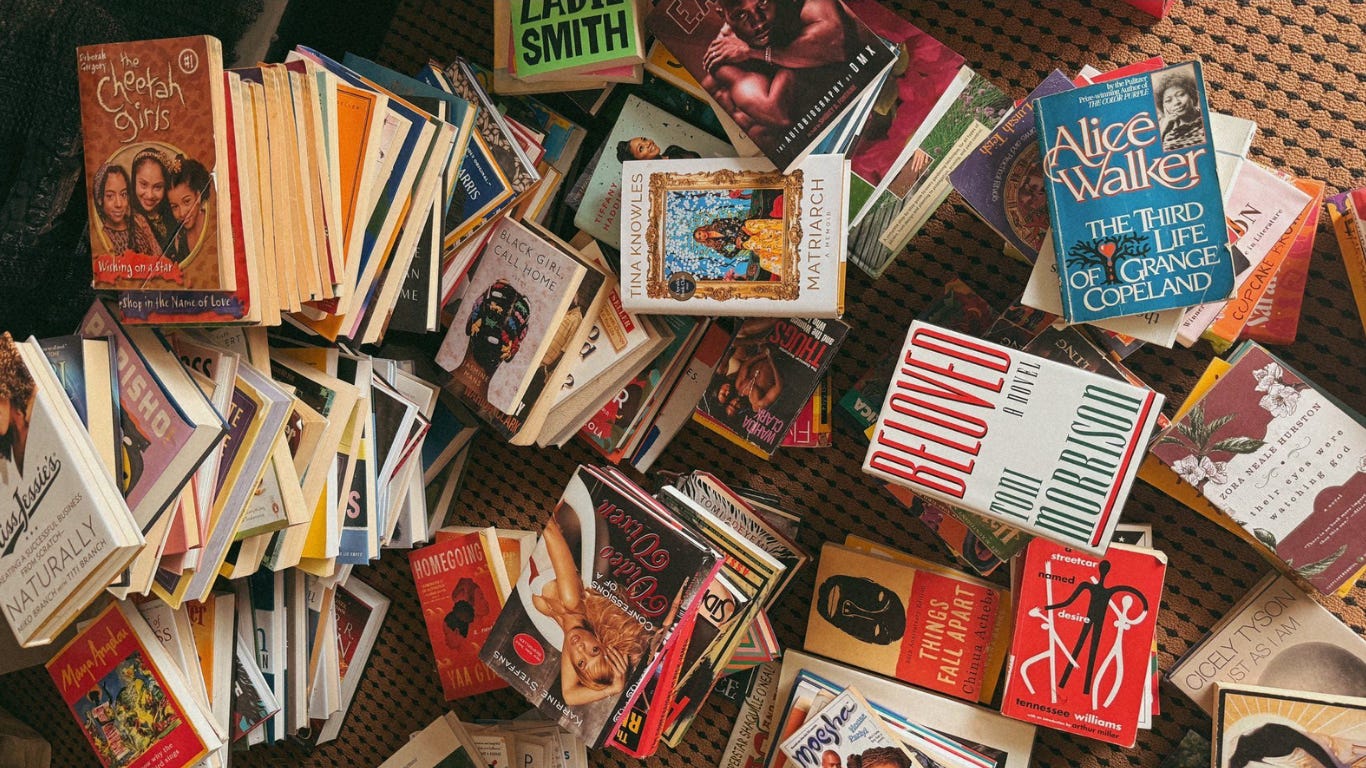
Don’t let Amazon Prime’s recent spate of romance adaptations fool you, America has a book problem.
Data from the National Endowment of the Arts, YouGov, and Gallup shows a consistent decline in American reading habits. For every 10 people in America, four of them didn’t pick up a single book in 2025, although the sheer amount of thinkpieces I saw this week about Taylor Swift’s Stevie Knicks t-shirt probably would’ve clued me in even if I didn’t have those stats. Reading for pleasure isn’t a popular habit for most people. But that’s never been my problem — at least, it wasn’t until last year.
Thinking of my earliest and fondest memories produces a tactical recollection of walking to the behemoth front desks of the York County Public Library with 20 books, the maximum amount allowed per patron. Not counting the three years of hell I fondly refer to as my undergraduate journalism and film degree, I’ve tracked my annual reading every year since I was 15 years old.
But beginning in 2019, my book list became less of a poorly formatted notes app and more of a detailed breakdown of every novel, memoir, and Kindle-unlimited romance ebook I shoved in front of my face.
Downloading the Storygraph app in 2020 took this even further from casual information to a Statistics 101 operation. I could do more than just tell you how many books I had read so far. I could recite what was my best performing month, which genres I read in how many hours, my most popular authors collated by number of books, and how many books I was on track to read by the end of the year. I didn’t realize this was a problem until one day a friend asked me what I was reading. After telling them the number of books I had checked off for the month, I was stumped by the simplest of questions: “Which one was your favorite?” I couldn’t answer, but maybe it was a bad month? When looking through the list didn’t help, I kept compartmentalizing. Could it be a bad season? But going through an entire 365 days of books produced a horrible revelation. The year I read 200 books, I only enjoyed 75 of them.
As someone who constantly lives in fear of having to ever turn over my thought daughter ID card, the end of this story isn’t realizing that I actually hate reading. The days that I accidentally leave my Kindle at home become unbearable. The bookcases in my home are sagging and overladen. My biggest life goal (even ahead of having children) is finishing The Power Broker. But what I did learn is that optimization creep isn’t just happening in classrooms or your social media algorithms or even in your friendships. It’s an inescapable part of this cultural moment — and it’s coming for your hobbies first.
It’s easy to point out an overfocus on getting the most things done the fastest in contexts where money or grinding is already at the forefront of your mind. Bosses will almost always encourage optimization to try and wring every ounce of labor out of workers that they can. But the constant blurring of lines between employment and free time means that thoughts of optimization rarely stay in their designated places.
Hobbies are the natural next place for optimization creep because if you love them, you’re already thinking about how to spend more time doing them. You want to prioritize weekends that don’t end, weeknights where you leave the bar early, or Partiful invites that you keep clicking maybe on but have no intentions of actually going to in the first place. And since we’re already so conditioned to link time to labor to money to speed, it’s an easy hop, skip, jump, and a face splat before your hobbies get hit with the optimization bug. It’s so telling of what our current culture prioritizes and can be a difficult problem. But the best part is optimization’s surprisingly simple answer: remind yourself you’re not on the clock.
The gaze of the overseer is not on your back while you’re playing Stardew Valley. No one is going to take your Switch away if you’re a little slow on a level. Taking a long time crocheting that hat? Who cares? It’s actually socialist to take three years to knit the Sophie scarf. Your junk journal moving at a glacial pace — buying junk on Amazon actually does defeat the purpose. The past six months have been some of the best time reading I’ve had in a long time. And they only happened after I released myself from the idea that I had to read a certain amount, certain books, or even read at all.
Sometimes things are allowed to be just for fun. And when you open yourself up to having fun without constraints, you’d be surprised about how the amount you get done becomes the least important part of your life.
tried to min max my free time so hard it turned into a second job 😭